

Lincoln High 12 Week Art Workshop Prepares Young Artists for College Competitions and Grants

Talent can open the door for a young artist, but preparation helps them walk through it with confidence. Many students know how to draw, paint, photograph, sculpt, or create mixed media work, but they have not always been taught how to present that work in a professional way.
This 12-week arts workshop at my former high school, Lincoln High, is designed to help young developing artists understand what it takes to grow from making art in the classroom to submitting work for college portfolios, national competitions, artist calls, and grant opportunities.
The program combines studio practice with professional development. Students will make new work, organize their strongest pieces, learn how to describe their ideas, and prepare submissions that can be used beyond the workshop.
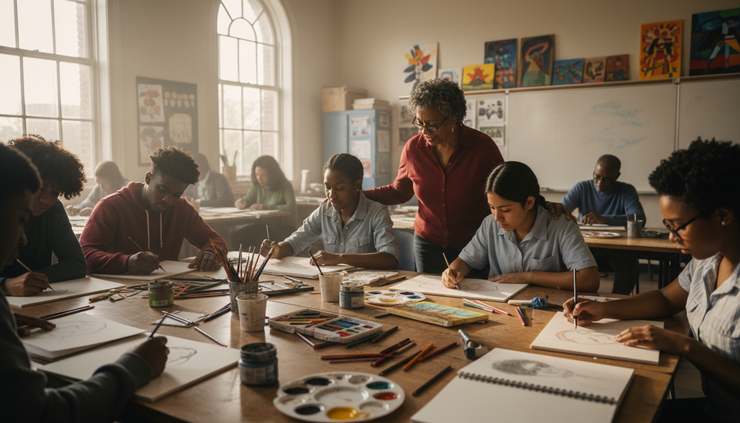
Choose the right 12-week workshop schedule
The Lincoln High workshop can be structured in two ways, depending on the school’s schedule, student needs, and available funding.
Workshop option | Schedule | Program fee | Best fit |
Two-day weekly workshop | 2 days per week for 12 weeks | $9,000 | Best for deeper studio time, more critique, and stronger final submissions |
One-day weekly workshop | 1 day per week for 12 weeks | $5,000 | Best for schools that need a focused professional art development program |
The two-day model gives students more time to create and revise their work. It also allows space for one day of studio production and one day of professional preparation each week.
The one-day model still covers the full curriculum, but it moves at a tighter pace. Students will need to stay organized between sessions and bring completed work back for feedback.
Both options focus on the same goal: helping students leave with stronger artwork, stronger language, and a clearer path toward opportunity.
Build the program around six professional art lessons
The workshop is built around six major lessons. Each lesson takes about two weeks, giving students enough time to learn the concept, practice it, and apply it to their own work.
Here is the full 12-week structure.
Weeks | Focus | Student outcome |
Weeks 1 and 2 | Set goals and understand the professional artist path | Students learn what colleges, jurors, and art organizations look for |
Weeks 3 and 4 | Create art across six mediums | Students experiment with drawing, painting, photography, sculpture, printmaking, and mixed media |
Weeks 5 and 6 | Find style and build a body of work | Students begin connecting technique, theme, and personal direction |
Weeks 7 and 8 | Organize, label, frame, and present artwork | Students prepare work so it can be viewed professionally |
Weeks 9 and 10 | Write artist statements and speak about the work | Students learn how to explain the meaning behind individual pieces |
Weeks 11 and 12 | Apply to artist calls, competitions, grants, and colleges | Students prepare real submission materials |
This structure keeps the workshop practical. Students will not only hear advice. They will use the advice on actual artwork, actual statements, and actual application materials.
Start by showing students what professional artists actually do
A young artist may think being professional means becoming famous, selling work, or having a gallery show. Those things can be part of an art career, but professionalism starts much earlier.
It starts with habits.
Students need to learn how to:
Photograph their artwork clearly
Track titles, sizes, dates, and materials
Meet deadlines
Follow submission rules
Talk about their choices
Accept critique without losing confidence
Revise work before sending it out
Understand the difference between a sketch, a study, and a finished piece
During the first two weeks, students will look at what goes into a complete submission. That includes the artwork, the written statement, the labels, the images, and the application form.
This is where the workshop begins to shift their mindset. Students are not just “turning in art.” They are learning how to prepare work for public review.
That matters because college admissions teams, jury committees, museum programs, and competition panels often see many submissions. A strong piece can be weakened by poor photos, missing information, unclear statements, or careless presentation.
The goal in these first weeks is simple: students should understand that talent and preparation must work together.
Create artwork through six major mediums
The studio portion of the workshop exposes students to six categories of art making:
Drawing
Painting
Photography
Sculpture
Printmaking
Mixed media
These mediums were chosen with purpose. They connect directly to the categories used in the Carol Harris Sims National Black Art Competition and Exhibition. By working in these forms during the semester, students will have a stronger chance of creating work that can be submitted to the national competition.
This also helps students discover where their strengths are.
Some students may come in believing they are only painters. After trying printmaking, they may find a new way to use shape and contrast. A student who loves drawing may discover that sculpture helps them think differently about form and space. A photographer may learn how mixed media can add texture and meaning to an image.
The point is not to force every student into every category forever. The point is to give them real exposure so they can make better choices.
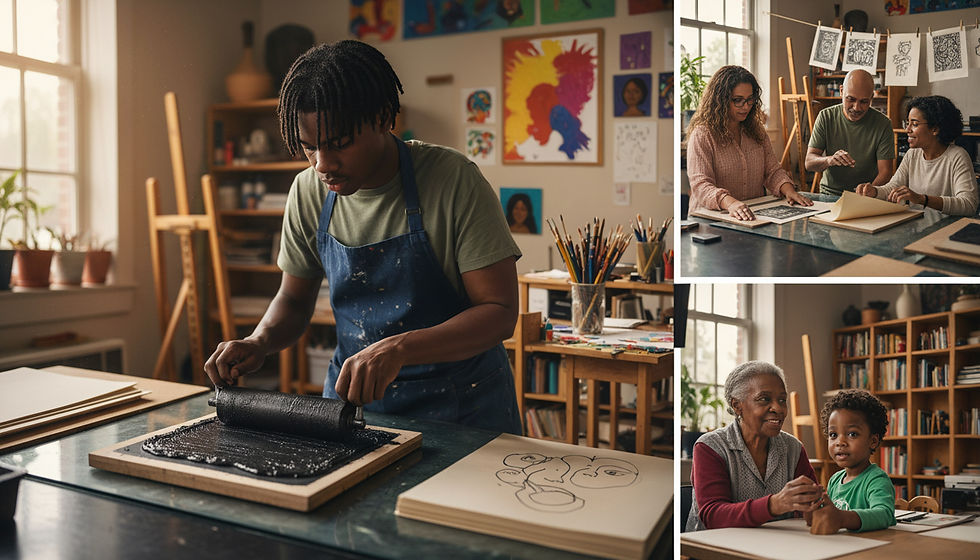
During Weeks 3 and 4, students will create studies and finished works in these six areas. The workshop will encourage them to think about craft, but also about meaning.
A drawing can be more than accurate. A painting can be more than colorful. A photograph can be more than a nice image. Each piece should begin to carry an idea.
Help students find style without rushing the process
Finding a style is one of the biggest questions young artists ask. Many students want their work to look recognizable right away. They may compare themselves to other artists and feel pressure to pick a style before they have explored enough.
The workshop treats style as something students build through repeated choices.
Style can come from:
Subject matter
Color choices
Line quality
Materials
Cultural references
Composition
Texture
Scale
Repeated themes
The questions the artist keeps returning to
Weeks 5 and 6 help students look at their own work and notice patterns. A student may keep making work about family stories. Another may focus on identity, memory, movement, nature, faith, neighborhood life, or social issues. Some may be drawn to realism. Others may prefer abstraction.
Both can be powerful.
A hyper-realistic portrait and an abstract mixed media piece can both succeed if the artist makes clear visual choices. The workshop will help students understand that style is not only about how the work looks. It is also about how the work thinks.
By the end of this section, each student should begin shaping a small body of work. That collection can become the foundation for a college portfolio, competition submission, or future exhibition opportunity.
Organize, label, frame, and present the artwork
Presentation changes how people receive artwork.
A strong piece can lose impact if it is wrinkled, poorly photographed, unlabeled, or placed in a weak frame. A simple work can feel more intentional when it is clean, measured, labeled, and installed with care.
Weeks 7 and 8 focus on the practical side of professional art presentation.
Students will learn how to organize their artwork by:
Title
Medium
Size
Year
Category
Status
Submission deadline
They will also learn the basic information that belongs on an artwork label. A clear label usually includes the artist’s name, title, year, medium, and dimensions. Depending on the setting, it may also include a short description or price, but students will first learn the standard structure.
Framing and finishing will also be part of the lesson. That does not mean every piece needs an expensive frame. It means every piece needs an intentional presentation.
A drawing may need clean edges and a proper mat. A painting may need secure wiring or finished sides. A photograph may need the right paper and clean mounting. Sculpture may need a stable base. Mixed media work may need protection if fragile materials are used.
How the work is presented helps determine how the public receives it.
This lesson is especially useful for students who plan to apply to exhibitions or competitions. Jury committees often review digital images first, but strong physical presentation still matters when work is accepted and shown.
Teach students to write artist statements that focus on the artwork
Many artists make the same mistake when writing an artist statement. They talk mostly about themselves.
They explain when they started making art, who inspired them, and why they love creating. That background can matter in the right setting, but it is often not the strongest way to write about a submitted piece.
Based on experience working with a jury committee and from former experience reviewing artwork, the stronger approach is to speak directly about the art piece being submitted.
The artist statement should help the viewer understand:
What the piece is exploring
What choices the artist made
What materials mean in the work
What symbols, images, or forms are doing
How the piece connects to a larger collection, if it is part of one
What deeper meaning, philosophy, or rhetoric is inside the work
For example, instead of writing only, “I started making art when I was young because it helped me express myself,” a student can write about the actual work:
“The layered newspaper in this mixed media piece represents public memory and how stories change depending on who is telling them. The red thread connects each figure to show how family history can hold people together even when the details are missing.”
That kind of statement gives the viewer something to look for. It brings the audience back to the artwork.
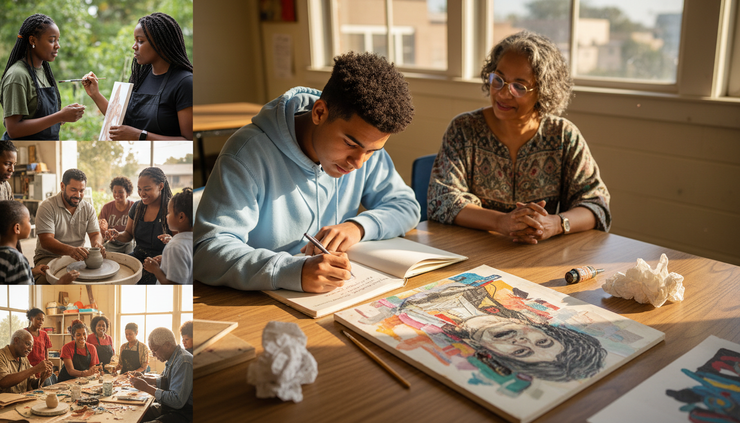
Weeks 9 and 10 will give students practice writing and speaking about their work. They will learn to avoid vague language and replace it with clear ideas.
They will also practice talking about art out loud. This can help with critiques, interviews, portfolio reviews, and public exhibitions. Students should be able to explain their work without memorizing a speech. They should sound honest, thoughtful, and connected to the piece.
Prepare college portfolios with care and purpose
A college portfolio should show skill, range, voice, and growth. It should not be a random folder of everything a student has ever made.
During the final part of the workshop, students will begin selecting work with a clearer eye. They will ask:
Which pieces show technical strength?
Which pieces show original ideas?
Which pieces feel complete?
Which pieces work well together?
Which pieces need better photos?
Which pieces should be revised or removed?
A good portfolio often benefits from variety, but the work still needs to feel connected. Students should show that they can explore different materials and still make thoughtful decisions.
The workshop will also help students understand basic submission habits. They will learn to read requirements closely, follow image size instructions, name files clearly, and meet deadlines.
This is a major part of the Lincoln High 12 Week Art Workshop Prepares Young Artists for College Competitions and Grants program because many students are capable of applying for strong opportunities, but they need guidance through the process.
Preparation can reduce confusion. It can also help students feel more confident when they send their work out.
Apply to national art competitions, artist calls, and grant opportunities
Weeks 11 and 12 focus on real-world applications.
Students will learn the difference between several types of opportunities:
Opportunity type | What students should understand |
College portfolio submission | Usually used for admissions or scholarships connected to an art program |
National art competition | Often juried and based on category, theme, age group, or medium |
Artist call | A request for artwork for an exhibition, public project, publication, or program |
Grant opportunity | A funding application that may require a proposal, budget, statement, and work samples |
The workshop will show students how to read an application before they begin. This is one of the most important habits an artist can learn.
Before submitting, students should check:
Eligibility
Deadline
Age or grade requirements
Medium requirements
Theme
File format
Image quality rules
Entry fees, if any
Statement length
Number of works allowed
Delivery or shipping expectations
The Carol Harris Sims National Black Art Competition and Exhibition will be part of this larger conversation. Since the workshop introduces students to the same six mediums used in that competition and exhibition, students will be better prepared to submit work that fits the categories.
This year’s competition will also open 10 slots for student artists to submit their work. That gives Lincoln High students a clear opportunity to work toward during the semester.
Grant opportunities will be introduced in a practical way. Students will learn that grants are not only about asking for money. A strong grant application usually explains the project, the purpose, the timeline, the materials, and the expected outcome.
Even if students are not ready to apply for every grant right away, learning the structure early helps them think like professional artists.
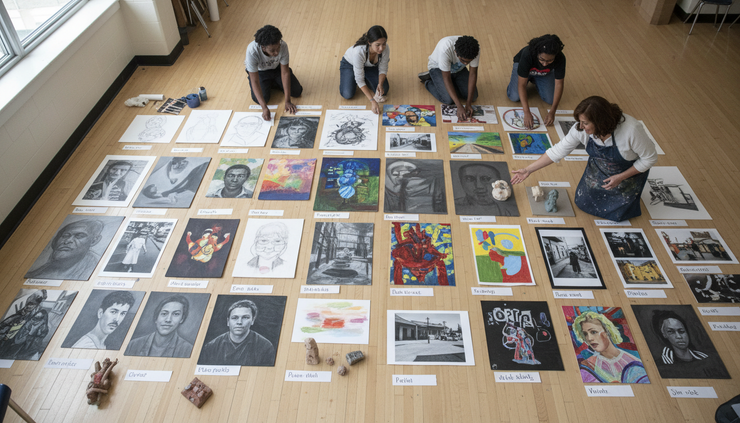
Measure success by what students can carry forward
The goal of the 12-week workshop is not only to make art for a grade. The goal is to help students leave with tools they can use again.
By the end of the program, students should have:
New artwork in multiple mediums
A clearer sense of personal style
Better presentation habits
Organized artwork records
Stronger labels and documentation
A written artist statement
Practice speaking about their work
A developing college portfolio quality art
A better understanding of artist calls
A path toward national competitions and grants
Some students may leave ready to submit immediately. Others may need more time to revise and build. Both outcomes are valuable because the workshop gives them a professional foundation.
Lincoln High is a meaningful place to host this program because it connects the next generation of artists to guidance, structure, and opportunity. When students learn how to create, present, explain, and submit their work, they begin to see art as more than a class. They begin to see it as a serious path.
The next step is to choose the workshop schedule, confirm the 12-week calendar, and begin preparing students to make work that can stand in front of a college panel, a jury committee, a museum audience, or a national competition with confidence.


Comments