

Curating Space and Amplifying Black Artists Voices

By LaKeem Wilson
When I walk into an empty gallery, I do not see an empty room. I see a space waiting to speak.
Every wall presents an opportunity to tell a story. The placement of an artwork, the movement of a visitor, the color of the walls, the lighting, the language of the labels, and the distance between objects all shape how that story is felt. A gallery can invite people to slow down, ask questions, remember, grieve, celebrate, or see themselves more clearly.
My curatorial practice is rooted in a simple belief: designing space is a creative act. I use space as my canvas, exhibitions as my language, and collaboration as my method.
Curating is often described as selecting and arranging art. That is part of the work, but it is not the whole truth. Curating also means caring for stories, building relationships, making decisions with intention, and understanding that the room itself can either hold an artist’s voice with care or flatten it.
For me, curating space and amplifying Black artists voices are connected responsibilities. The space must be designed with attention, but the purpose of that design is never just beauty. The purpose is clarity, dignity, and connection.

The empty gallery is never empty
Before a painting is hung or a sculpture is placed, the room already has a presence. It has height, light, sound, corners, sightlines, entrances, and pauses. It has limits. It has possibilities.
When I enter a gallery, I begin by listening to the space. I look at how someone might walk through it. I notice where the eye naturally lands. I pay attention to where a visitor might stop without being told to stop. I think about where a work can breathe and where it might feel crowded.
This part of curating is quiet, but it matters. A powerful work of art can lose some of its force if it is placed without care. A small work can become unforgettable when the room gives it the right measure of attention. A group of works can begin to speak to one another when the spacing, sequencing, and rhythm are carefully considered.
The gallery is not a neutral container. It shapes memory. It can create closeness or distance. It can make visitors feel welcome or unsure. It can guide them gently or overwhelm them. The curator’s task is to make those choices visible only through experience, not through force.
A well-designed exhibition does not need to shout. It gives visitors room to meet the work.
Curating is both creative practice and cultural responsibility
My life in museums has taught me that curating is both a creative practice and a cultural responsibility. I approach exhibitions as an artist, curator, creative director, educator, and exhibition professional. Each role gives me a different way of seeing.
As an artist, I understand the vulnerability involved in presenting personal work to the public. Every work of art contains part of the person who created it. It may hold a memory, a question, a struggle, a celebration, or a truth that the artist could not express through words alone.
To place that work in a public space is to ask it to carry meaning in front of strangers. That takes courage. The artist has already done the work of making something honest. The curator must meet that honesty with care.
As a curator, I understand the responsibility of receiving, documenting, installing, interpreting, and protecting that work. None of those tasks are separate from the creative process. Care is part of the artistry.
The work must be handled with respect. The artist’s intent must be heard. The exhibition must be built in a way that helps the artwork communicate within a larger story. That story should never erase the artist’s individuality.
My responsibility is not to speak over artists. My responsibility is to create the conditions for their voices to be clearly seen, heard, and understood.
The strongest exhibitions do not replace the artist’s voice. They make room for that voice to carry.
The artist and the curator meet inside the same room
There is a tension in curatorial work that I value. The curator must make choices, but those choices should not become control for control’s sake. The exhibition needs a point of view, but that point of view should not reduce the art to evidence for someone else’s argument.
This is where listening becomes a curatorial tool.
When I work with artists, I want to understand what they are trying to hold, question, and offer. I want to know what matters to them about the work. I want to understand not only the finished object, but also the process, the context, and the emotional weight behind it.
That does not mean every conversation becomes a label. Some things remain private. Some meanings remain open. Some works ask for silence more than explanation. A good curator must know the difference.
The artist and curator meet inside the exhibition through trust. The artist trusts the curator to respect the work. The curator trusts the work to lead the experience. The visitor enters that relationship later, but they should feel the care that shaped it.
When this relationship is healthy, the exhibition becomes more than a display. It becomes a shared act of meaning-making.
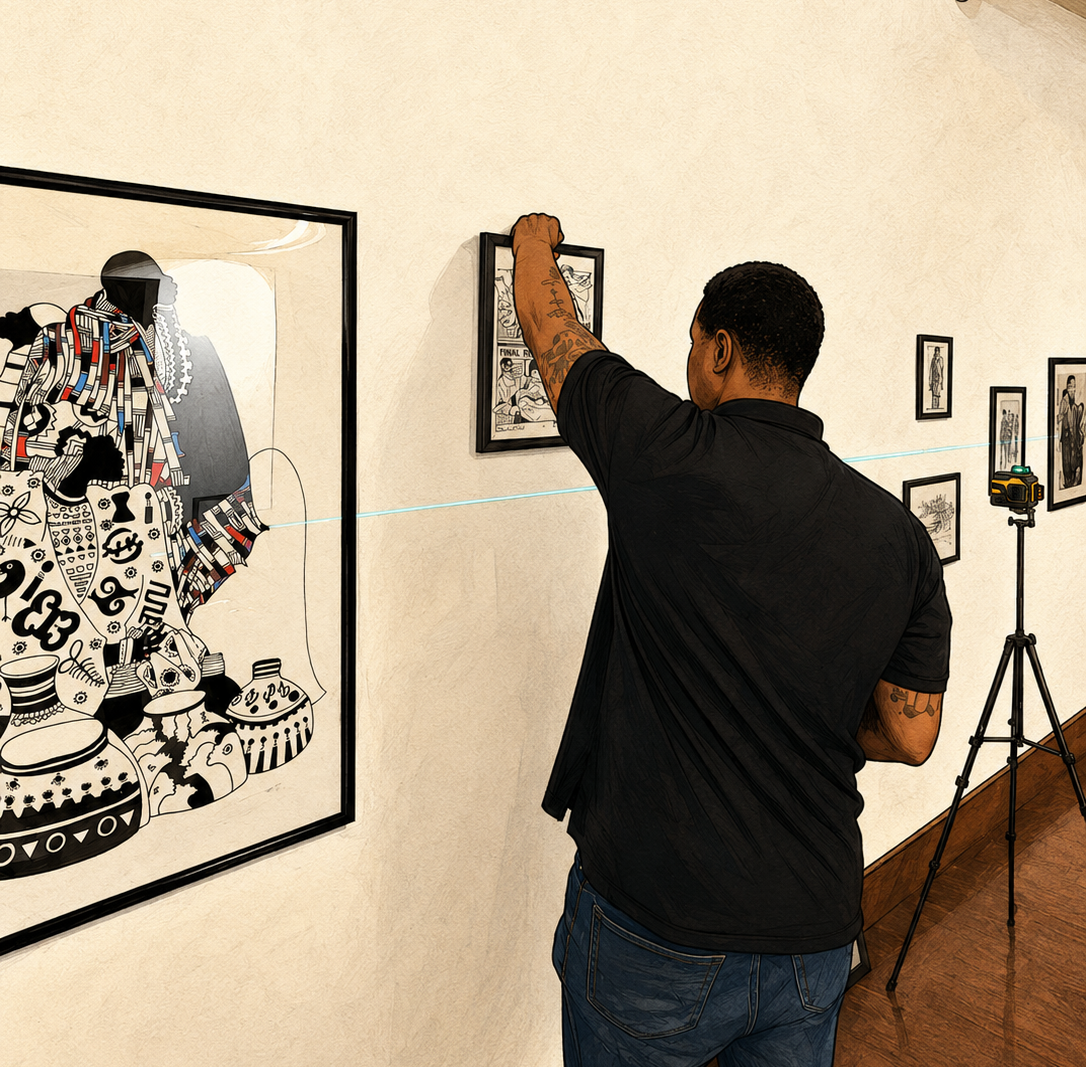
Space becomes a language
Exhibitions communicate through more than text. They speak through scale, color, light, and movement. They speak through what is placed together and what is given distance.
A visitor may not consciously notice every decision. They may not know why one room feels intimate and another feels expansive. They may not think about why a certain artwork appears at the end of a sightline or why a bench sits near one work and not another. Still, they feel those choices.
That is why I see space as a language.
The wall color can soften or sharpen the mood of an exhibition. Lighting can bring texture forward or create a moment of quiet focus. The order of works can build a narrative, interrupt an assumption, or allow contrast. The label text can open a door without closing down interpretation.
Even negative space has meaning. The distance between objects can create breathing room. It can honor the presence of a work. It can give the viewer time to process what they have just seen before moving on to the next piece.
Some artworks need intimacy. Some need scale. Some need to be encountered slowly. Others strike quickly and stay with the viewer after they leave. The curator must understand those differences and design for them.
Good exhibition design does not decorate the art. It supports the encounter between the artwork and the visitor.
Black artists deserve platforms built with care
Creating space for Black artists is not only about inclusion. It is about recognition, respect, and the right to complexity.
Black artists are often asked to carry broad cultural meaning. Their work can be expected to explain history, represent community, respond to injustice, or prove its place in institutions that have not always made room for it. While art can certainly do those things, Black artists must also be allowed to be experimental, joyful, quiet, abstract, personal, playful, spiritual, critical, unresolved, and free.
A national platform for Black artists must make room for that full range.
As this year’s coordinator for the Carroll Harris Simms National Black Art Competition and Exhibition, I have the responsibility of helping create a platform for Black artists working across different regions, generations, ideas, and mediums. The competition represents an important tradition of recognition and opportunity. It brings artists into conversation with one another and with the public.
My role requires organization, communication, research, artist relations, and close attention to detail. It also requires humility. Each artist arrives with a practice, a history, and a reason for making. The work may come from different places and speak in different ways, but each piece deserves serious attention.
A national exhibition offers visibility, but visibility alone is not enough. The platform must be built with care. It must respect the labor behind the work. It must communicate clearly with artists. It must install the work thoughtfully. It must welcome visitors into the experience without reducing the work to a single explanation.
That kind of platform can affirm artists while also challenging audiences to look longer and think more deeply.
Recognition is only meaningful when it is specific
Recognition can become shallow when it is treated as a general gesture. Artists do not need vague praise. They need full attention.
Specific recognition asks better questions:
What is this artist doing with material?
How does the work use scale, surface, image, or form?
What does the piece ask from the viewer?
What histories or personal experiences might speak through it?
How does the work connect to other works without losing its own voice?
What kind of space does it need in order to be met honestly?
These questions help move the exhibition beyond token inclusion. They push the curator to treat every work as a complete artistic statement.
This is especially important when presenting Black artists in a national context. The word “Black” holds many identities, histories, geographies, aesthetics, and lived experiences. No single exhibition can contain all of that. No artist should be asked to stand in for all of it.
A thoughtful exhibition can show relationship without forcing sameness. It can create dialogue without flattening difference.
That is part of the art of curating. It means building connections with care, not convenience.

Labels should open doors, not close meaning
The language of an exhibition matters. A label can help visitors see more, or it can tell them too much too soon. It can welcome people into the work, or it can make them feel like they need permission to understand it.
As an educator, I care about access. I believe museums should invite people into learning without making them feel small. Clear language does not weaken an exhibition. It strengthens it.
A good label can offer context, but it should leave room for personal response. It can explain a material choice, name a reference, or share an artist’s thought process. It can help a visitor understand what they are looking at without deciding what they must feel.
This balance is especially important when presenting work connected to identity, memory, and history. The label should not turn the artwork into a lesson plan. It should support the visitor while honoring the complexity of the work.
The most effective interpretive writing often does three things:
It gives the viewer a place to begin.
It offers useful context without crowding the artwork.
It respects the viewer’s ability to think and feel.
The goal is not to simplify the artist’s work. The goal is to make the first step into the work possible.
The visitor’s movement is part of the story
An exhibition unfolds through the body. Visitors enter, turn, pause, lean in, step back, sit down, continue, return, and sometimes leave with a question they cannot yet answer.
That movement matters.
When I design an exhibition, I think about rhythm. I consider where intensity builds and where quiet is needed. I think about which works should greet visitors first and which works should come later. I think about where people may gather and where they may need solitude.
This does not mean controlling every response. Visitors bring their own memories, knowledge, and emotions into the space. They may notice connections I did not plan. They may be drawn to a work for reasons that belong fully to them. That unpredictability is part of what makes exhibitions alive.
Still, curatorial design can shape the conditions for encounter. The path through the gallery can help visitors move from looking to reflection. It can create a sense of discovery. It can allow the exhibition to unfold in layers rather than all at once.
When the movement works, visitors do not feel pushed. They feel guided.
Collaboration is the method
Curating is never a solo act, even when a single person carries the title of curator. Exhibitions are built through collaboration.
Artists, preparators, registrars, educators, designers, writers, administrators, jurors, technicians, and community partners all contribute to the final experience. Each role matters. The public may only see the completed exhibition, but the finished room carries the labor of many hands.
Collaboration requires clear communication. It also requires respect for different forms of knowledge. The person installing the work may see a spatial issue before anyone else. The artist may notice a detail in placement that changes the entire feeling of the piece. The educator may understand what questions visitors are likely to bring. The registrar protects the physical life of the work through careful procedure.
When these perspectives come together, the exhibition becomes stronger.
In my practice, collaboration is not just a process. It is an ethic. It reminds me that exhibitions are built through trust, and trust is built through consistency, listening, and follow-through.
Museums are places of memory and possibility
Museums hold history, but they also shape the future of what people value. What gets collected, displayed, named, preserved, and discussed affects cultural memory. That is why curatorial work carries responsibility.
For Black artists, museum spaces can hold both harm and possibility. Many institutions have histories of exclusion, limited access, and narrow interpretation. At the same time, exhibitions can create recognition, study, preservation, and public encounter.
I do not take that tension lightly.
To curate Black artists in museum spaces is to work inside a complicated history while making room for a more honest future. It means asking who has been seen, who has been left out, who has been misunderstood, and who is now being invited to speak on their own terms.
It also means refusing to treat Black art as a single category with one message. Black artists work across abstraction, portraiture, sculpture, photography, fiber, performance, installation, and many other forms. They engage beauty, grief, politics, family, spirituality, place, humor, material, and imagination. Their voices are not one voice. They are many.
A thoughtful exhibition can help visitors experience that range. It can show that Black art is not limited to response. It is also invention, memory, critique, experimentation, and vision.
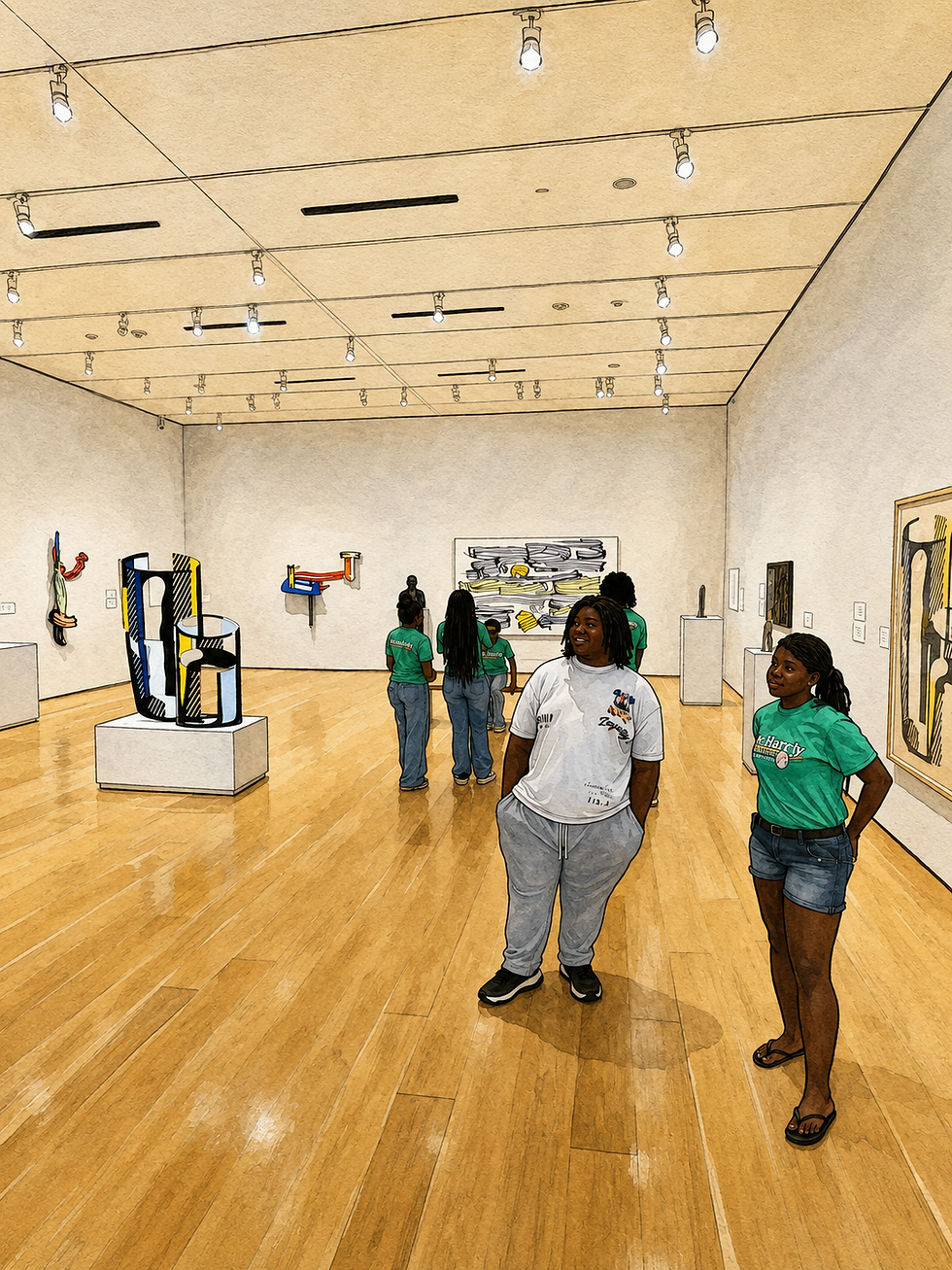
The exhibition is a conversation that continues
An exhibition does not end when the last artwork is installed. In many ways, that is when another part begins.
Visitors bring the exhibition to life through their attention. They stand before the work and form connections. They ask questions. They talk with one another. They return to a piece that unsettled them or comforted them. They carry certain images home in memory.
Artists also continue the conversation. They may see their work differently in relation to others. They may gain new audiences, new questions, or new confidence. They may feel heard in a way that matters.
The curator remains part of that exchange, but not at the center of it. The work belongs to the artists. The experience belongs to everyone who enters with openness.
This is why I believe curating is an art form. It requires vision, discipline, sensitivity, and craft. It asks for decisions that are both practical and poetic. It calls for an understanding of objects, people, stories, and space.
The curator works with walls, light, language, and movement. But the deeper work is care.
What I hope the space makes possible
When people enter an exhibition I have helped shape, I hope they feel invited to slow down. I hope they sense that the work has been treated with respect. I hope the artists feel that their voices have not been crowded, distorted, or used as decoration.
I hope the space allows for encounter.
Some visitors may come with deep knowledge of art. Others may come with curiosity, uncertainty, or no formal background at all. I want the exhibition to meet them without lowering the work. I want the space to offer access without reducing complexity.
Most of all, I want Black artists to be seen in the fullness of their practice. Not as symbols alone. Not as additions to someone else’s story. Not as a temporary focus. As artists with ideas, methods, histories, and futures worthy of sustained attention.
Curating, at its best, is an act of service to the artwork and to the public. It is also an act of imagination. It asks what kind of space a story needs in order to be heard.
When I walk into an empty gallery, I see that possibility before anything is installed. I see the walls waiting. I see the path that has not yet been walked. I see the chance to honor artists through every choice, from the first conversation to the final light adjustment.
A gallery may begin as an empty room, but with care, it can become a place where voices carry, stories gather, and people leave seeing differently.
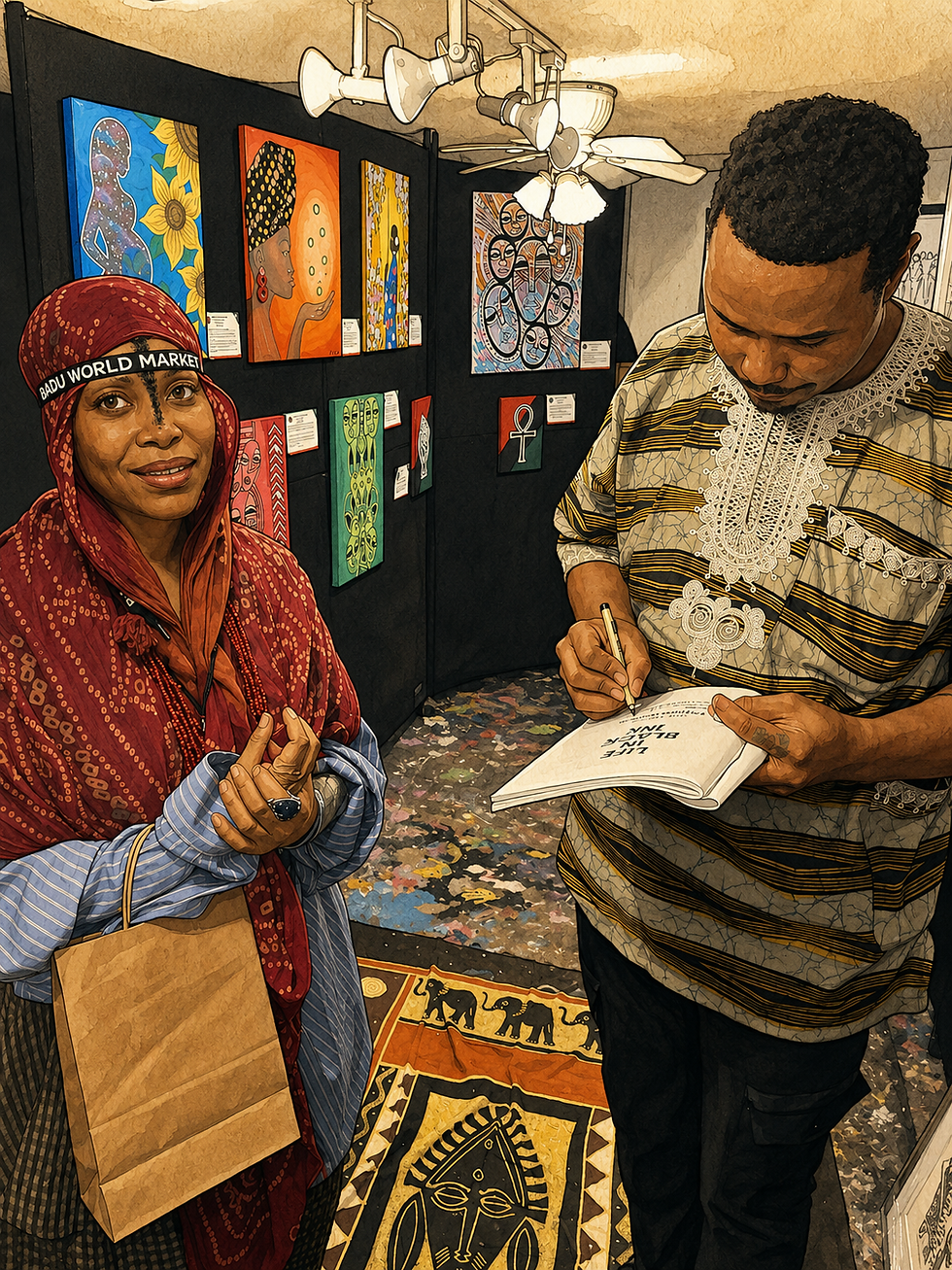
Blog Brought To You by BEAMS WORLD RECORDS - Bridging Education, Art, Music, and Storytelling


Comments